

Computational Systems Biology Section
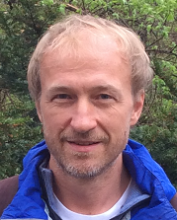
Martin Meier-Schellersheim, Ph.D.
Chief, Computational Systems Biology Section
Major Areas of Research
- Quantitative experimental analysis and computational modeling to explore intra- and intercellular signaling processes and cellular behavior
- In-vitro reconstruction and computational models of extracellular matrices to investigate how cellular morphology and migration behavior is determined by the extracellular environment
- Development of tools for analyzing and simulating reaction-diffusion processes at the level of single-particle dynamics
- Contributing to the development of a Systems Biology Markup Language (SBML) standard for describing multi-component, multi-state molecular complexes and their roles for biochemical reaction networks
- Investigation of T-cell proliferation, differentiation, and death to identify mechanisms of T-cell homeostasis and the reasons for its failure after HIV/SIV infection by using sets of coupled, ordinary differential equations and agent-based approaches
- Development of interfaces between proteomic databases and computational modeling tools
Program Description
The main limiting factors hindering progress towards a more quantitative biology are the scarcities of detailed quantitative experimental data and of computational tools designed to use such data for the development and testing of biologically meaningful models. This is especially true for cell biology, where the success of predictive models in areas such as immunology or oncology depend on our ability to acquire and model data at multiple spatial/physiological scales, from the subcellular, molecular scale to the scale of whole cells and beyond to cell populations.
Unfortunately, the two factors enhance each other. For example, most experimental biologists see no need to consistently calibrate fluorescent-activated cell sorting measurements or provide absolute levels—as opposed to just relative to "control"—of intracellular protein expression or phosphorylation and their subcellular spatial distributions. This is because the computational approaches that could turn those data into quantitative models have been either unavailable or inaccessible to experimentalists because their application requires a strong background in physics, mathematics, and computer science.
Theorists, on the other hand, frequently resort to oversimplified modeling approaches because detailed quantitative data that would be needed for biologically more realistic models are missing.
Systems biology promises to overcome this deadlock by systematically generating highly detailed data sets and by fostering the development of the computational approaches appropriate for these data. Such new computational approaches necessarily differ from the classical mathematical biology strategies that put a strong emphasis on parsimony—in most cases mainly in order to keep the equations easily tractable.
In our work, we aim at combining carefully planned quantitative experiments with computational modeling approaches that allow us to capture as much biological detail as is required to systematically investigate aspects of cellular behavior such as signaling processes or migration. Typically, we start with rather simple (”bare bones”) models of a cell-biological process we want to analyze and then iteratively add more components to be able to reproduce experimental findings. Modifying and extending computational models is facilitated by our modeling software “Simmune.”
Simmune Software
Simmune is the name of a suite of software tools that guides the user through the multiple hierarchical scales of cellular behavior, facilitating the generation of comprehensive models. It was originally created to simulate immunological phenomena—hence its name, Simmune—but it is applicable to a very broad class of cell biological models.
The development of Simmune started at the Institute for Theoretical Physics of the University of Hamburg, Germany. Now, its development continues as part of the biocomputation effort at the NIAID Laboratory of Immune System Biology.
The goal of our work is to provide the computational approaches appropriate for modeling cell biological systems based on data that describe cellular behavior on various scales, from interactions between molecular domains to the behavior of populations of cells.
In our view, such modeling software should not only offer cutting edge technical simulation capabilities but also, importantly, should make it possible for (experimental) biologists to define the computational equivalents of their biological models without having to deal with scripting languages or the mathematics involved in translating those models into formalized representations that can be (quantitatively) simulated.
The graphical user interface of the Simmune modeler allows the biologist to easily interact with the modeling software and largely eliminates the necessity to follow the "classical" strategy of first translating a biological model into a simplified version that then can be "modeled" by a theorist.
Analyzing and simulating single-particle stochastic behavior
At the fundamental level, all biochemical processes are the result of stochastic molecular motion and interactions. In many cases, molecular concentrations are high enough and the molecules are sufficiently evenly distributed in space to make mass action-based approaches applicable. However, especially in the context of interactions among membrane-bound proteins, spatial inhomogeneities and low concentrations can lead to effects that cannot be captured with techniques assuming evenly distributed molecular players. To address the conceptual and technical challenges associated with a proper computational treatment, we are developing mathematical tools based on the description in terms of reaction-diffusion Green's functions.
SBML3 multi-component multi-state
The Systems Biology Markup Language (SBML) provides a standard for encoding (biochemical) reaction networks, such as those regulating cellular behavior. Classically, SBML-based descriptions were technically equivalent to descriptions based on sets of coupled differential equations. More recently, efforts have been started to extend SBML in a way that permits encoding interactions among binding sites (domains) of molecular entities that can be composed of multiple components and exist in multiple states. This extension that reflects the trend to describe and simulate cellular biochemistry based on such properties is called 'SBML3 multi' and has been a major focus of our work.
This document represents the current proposal for SBML3 multi.
Biography
Education
Ph.D., 2001, University of Hamburg, Germany
Dr. Meier-Schellersheim obtained a master’s degree in physics in 1997 and a Ph.D. in 2001 from the University of Hamburg, Germany. His research focuses on building a bridge between experimental and computational cell biology through the development and application of modeling tools that combine accessible graphical interfaces with the capability to perform spatially and temporally highly resolved simulations, even for models of complex cellular signaling processes.
Selected Publications
Boughter CT, Meier-Schellersheim M. Conserved biophysical compatibility among the highly variable germline-encoded regions shapes TCR-MHC interactions. Elife. 2023 Oct 20;12:e90681.
Prüstel T, Meier-Schellersheim M. Space-time histories approach to fast stochastic simulation of bimolecular reactions. J Chem Phys. 2021 Apr 28;154(16):164111.
Gonnord P, Angermann BR, Sadtler K, Gombos E, Chappert P, Meier-Schellersheim M, Varma R. A hierarchy of affinities between cytokine receptors and the common gamma chain leads to pathway cross-talk. Sci Signal. 2018 Apr 3;11(524):eaal1253.
Petrie Aronin CE, Zhao YM, Yoon JS, Morgan NY, Prüstel T, Germain RN, Meier-Schellersheim M. Migrating myeloid cells sense temporal dynamics of chemoattractant concentrations. Immunity. 2017 Nov 21;47(5):862-874.
Angermann BR, Klauschen F, Garcia AD, Prustel T, Zhang F, Germain RN, Meier-Schellersheim M. Computational modeling of cellular signaling processes embedded into dynamic spatial contexts. Nat Methods. 2012 Jan 29;9(3):283-9.
Prüstel T, Meier-Schellersheim M. Exact Green's function of the reversible diffusion-influenced reaction for an isolated pair in two dimensions. J Chem Phys. 2012 Aug 7;137(5):054104.
Research Group
Computational and quantitative experimental cell biology and immunology