
8 Results
Powerful Sequencing Tool Helps Identify Infectious Diseases in Mali
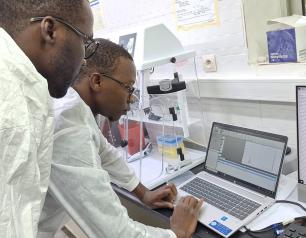
Advanced diagnostic tool tested in Mali helped identify infectious viruses in patients that normally would have required many traditional tests.
World Mosquito Day 2024—The Metabolic Mysteries of Mosquito Metabolism
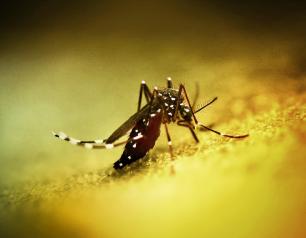
Mosquitoes are considered one of the most dangerous animals on earth because of their broad distribution and the many pathogens they transmit to humans. Dr. Patricia Scaraffia, Associate Professor at the Tulane University School of Public Health and Tropical Medicine, has dedicated her career to understanding the metabolism of the mosquito species that carries the pathogens responsible for dengue, Zika, chikungunya, and yellow fever to humans. NIAID reached out to Dr. Scaraffia about her team’s research.
NIAID Raises Awareness to Malaria-like Diseases in W. Africa
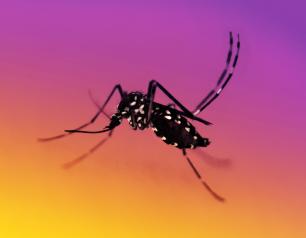
NIAID scientists and colleagues have identified dengue, Zika and chikungunya viruses in the West African country of Mali, where health care providers could be misdiagnosing patients as having malaria. All four infectious diseases are caused by a mosquito bite.
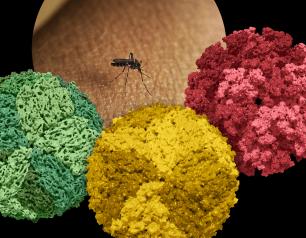
New Tool Identifies Aedes Mosquito Exposure in People
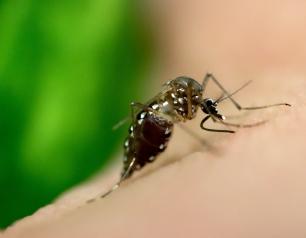
Scientists at NIAID developed a new tool to help identify geographic hot spots for Aedes mosquitoes, a type of mosquito that can spread diseases such as dengue, Zika and chikungunya. The tool uses a marker from blood serum to identify people bitten by Aedes mosquitoes. Monitoring for this marker in blood samples could help find sites where disease-carrying mosquitoes live, allowing for targeted interventions against dengue and other diseases.
NIAID and Cuban Scientists Gather to Discuss Global Health Challenges
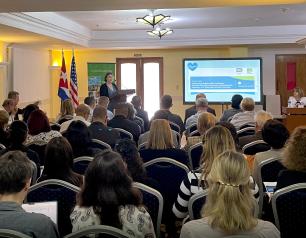
Recent disease outbreaks in the Americas led U.S. and Cuban scientists to hold a meeting Feb. 14-16 on Addressing Global Health Challenges Through Scientific Innovation and Biomedical Research.
Scientists Discuss Prototype Pathogens for Pandemic Preparedness
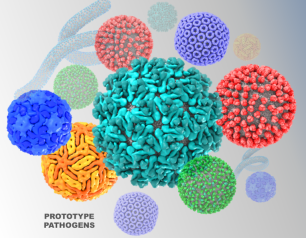
A special Oct. 19 supplement to the Journal of Infectious Diseases contains nine articles intended as a summary of a National Institute of Allergy and Infectious Diseases (NIAID)-hosted pandemic preparedness workshop that featured scientific experts on viral families of pandemic concern.
World Mosquito Day 2023—How Mathematical Modeling Reveals the Link Between Climate Change and Mosquito-Borne Diseases
As global temperatures rise, it has become more urgent to understand the interactions between climate, mosquitoes, and the pathogens mosquitoes transmit to humans. NIAID Now spoke to Luis Chaves, Ph.D., a 2023 Scholar with the National Institutes of Health (NIH) Climate Change and Health Initiative, about his work about the impacts of environmental change on the ecology of insect vectors and the diseases they transmit.

Promising Advances for Antibody Treatment of Viruses that Cause Neurologic and Arthritic Diseases
NIAID scientists and colleagues are one step closer to developing a safe and effective therapy against alphaviruses, which are spread by mosquitoes and can cause two types of disease in people: causing severe neurological impairment such as encephalitis (brain swelling) or crippling muscle pain similar to arthritis.