

8 Results
NIH Statement on World Asthma Day 2023
May 1, 2023
Today, the National Institutes of Health recognizes World Asthma Day and the innovative research that is helping to shed light on the disease, pave the way for effective treatments and improve the lives of people who have asthma.
NIH Study Links Specific Outdoor Air Pollutants to Asthma Attacks in Urban Children
January 4, 2023
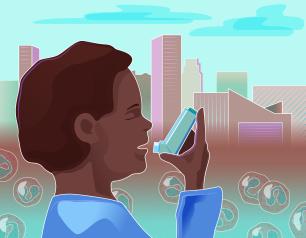
Moderate levels of two outdoor air pollutants, ozone and fine particulate matter, are associated with non-viral asthma attacks in children and adolescents who live in low-income urban areas, a study funded by the National Institutes of Health has found. The study also identifies associations between exposure to the two pollutants and molecular changes in the children’s airways during non-viral asthma attacks, suggesting potential mechanisms for those attacks.

Monoclonal Antibody Improves Cat Allergen Immunotherapy
October 11, 2022
An experimental approach to enhancing a standard cat allergen immunotherapy, often called allergy shots, made it more effective and faster acting, and the benefits persisted for a year after treatment ended.

Monoclonal Antibody Reduces Asthma Attacks in Urban Youth
August 10, 2022
A monoclonal antibody, mepolizumab, decreased asthma attacks by 27% in Black and Hispanic children and adolescents who have a form of severe asthma, are prone to asthma attacks and live in low-income urban neighborhoods, a National Institutes of Health clinical trial has found.
NIH Launches Trial of Monoclonal Antibody to Treat Asthma in Urban Youth
June 2, 2022
The National Institutes of Health has launched a clinical trial testing whether a monoclonal antibody, dupilumab, can reduce asthma attacks and improve lung function and asthma symptoms in children with poorly controlled allergic asthma who live in low-income urban neighborhoods.
Food Allergy Is Associated with Lower Risk of SARS-CoV-2 Infection
June 1, 2022
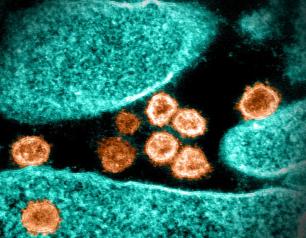
A National Institutes of Health-funded study has found that people with food allergies are less likely to become infected with SARS-CoV-2, the virus that causes COVID-19, than people without them.
NIH Statement on World Asthma Day 2021
May 5, 2021
On World Asthma Day, the National Institutes of Health reaffirms its commitment to research to improve the lives of people with asthma. More than 25 million people in the United States have asthma, including 5.1 million children, according to the Centers for Disease Control and Prevention. This chronic lung disease can reduce quality of life, contributes to considerable emotional and financial stress, and is a major contributing factor to missed time from school and work.
NIH Establishes New Childhood Asthma Clinical Research Network
April 23, 2021
The National Institute of Allergy and Infectious Diseases (NIAID), part of the National Institutes of Health, has awarded $10 million in first-year funding to establish a clinical research network called Childhood Asthma in Urban Settings (CAUSE). This nationwide network will conduct observational studies and clinical trials to improve understanding of asthma and develop treatment and prevention approaches tailored to children of low-income families living in urban communities. NIAID intends to provide approximately $70 million over seven years to support the CAUSE network.