

The Bioinformatics and Computational Biosciences Branch's (BCBB) structural biology team develops and applies theoretical and computational methods to biological problems at the molecular level. Our work encompasses a broad range of topics relevant to structural biology, from quantum chemical calculations of small molecules to large-scale simulations of macromolecules and their complexes. Specific topics include the physicochemical modeling of proteins and nucleic acids, mechanism-based design of drugs and image probes, the structure, dynamics, and kinetics of proteins, enzyme mechanisms, molecular recognition, protein-ligand association, and multiprotein complexation. We are also interested in the application of mathematical and statistical methods to data analysis and image reconstruction problems and the integration of molecular and machine learning approaches.
We collaborate with NIAID and NIH investigators to elucidate the molecular basis of disease with the aim of translation. Major projects include the development of anti-tuberculosis drugs and other antimicrobial agents, e.g., against drug-resistant bacteria.
Technologies
Publications
H. Zhao, D. Wu, S. A. Hassan, A. Nguyen, J. Chen, G. Piszczek, and P. Schuck. A Conserved Oligomerization Domain in the Disordered Linker of Betacoronavirus Nucleocapsid Proteins. Science Adv. (2023, accepted)
F. G. Frost, M. Morimoto, P. Sharma, L. Ruaud, N. Belnap, D. G. Calame, Y. Uchiyama, N. Matsumoto, M. M. Oud, E. A. Ferreira, V. Narayanan, S. Rangasamy, M. Huentelman, L. T. Emrick, I. Sato-Shirai, S. Kumada, N. I. Wolf, P. J. Steinbach, Y. Huang, Undiagnosed Diseases Network, B. N. Pusey, S. Passemard, J. Levy, S. Drunat, M. Vincent, A. Guet, E. Agolini, A. Novelli, M. C. Digilio, J. A. Rosenfeld, J. L. Murphy, J. R. Lupski, G. Vezina, E. F. Macnamara, D. R. Adams, M. T. Acosta, C. J. Tifft, W. A. Gahl, and M. C. V. Malicdan. Bi-Allelic SNAPC4 Variants Dysregulate Global Alternative Splicing and Lead to Neuroregression and Progressive Spastic Paraparesis. Am. J. Hum. Genet. (2023, in press)
A. Ricciardi, S. A. Hassan, O. Kamenyeva, S. Bennuru, J. Andersen, and T. B. Nutman. A Parasite-encoded Human IL-10 Receptor Antagonist Reveals a Novel Strategy Used to Modulate the Host Response in Filarial Infections. Proc. Natl. Acad. Sci. (USA) Nexus 4, 1 (2022)
S. Batzios, G. Tal, A.T. DiStasio, Y. Peng, C. Charalambous, P. Nicolaides, E.-J. Kamsteeg, S.H. Korman, H. Mandel, P.J. Steinbach, L. Yi, S.R. Fair, M.E. Hester, A. Drousiotou, and S.G. Kaler. Newly Identified Disorder of Copper Metabolism Caused by Variants in CTR1, a High-Affinity Copper Transporter. Hum. Mol. Genet. 31, 4121 (2022)
V. Vishwesh, T. H. Colligan, G. T. Lesica, D. R. Olson, J. Gaiser, C. J. Copeland, T. J. Wheeler, and A. Roy. Drugsniffer: An Open Source Workflow for Virtually Screening Billions of Molecules for Binding Affinity to Protein Targets. Front. Pharmacol. 13, 1 (2022)
H. Zhao, A. Nguyen, D. Wu, Y. Li, S. A. Hassan, J. Chen, H. Shroff, G. Piszczek, and P. Schuck. Plasticity in Structure and Assembly of SARS-CoV-2 Nucleocapsid Protein. Proc. Natl. Acad. Sci. (USA) Nexus 1, 1 (2022)
S. A. Hassan and P. J. Steinbach. Modulation of Free Energy Landscapes as a Strategy for the Design of Antimicrobial Peptides. J. Biol. Phys. 48, 151 (2022)
M. R. Iyer, R. Cinar, C. Wood, C. N. Zawatsky, N. J. Coffey, K. A. Kim, Z. Liu, A. Katz, S. A. Hassan, and Y. S. Lee. Synthesis, Biological Evaluation, and Molecular Modeling Studies of 3,4-Diarylpyrazoline series of Compounds as Potent, Non-Brain Penetrant Antagonists of Cannabinoid-1 Receptor with Reduced Lipophilicity. J. Med. Chem. 65, 2374 (2022)
See a more complete list.
Research Team
Team Lead
Peter J. Steinbach, Ph.D.
Education:
Ph.D., Physics, 1990, University of Illinois, Urbana-Champaign
Team Members
Phillip Cruz, Ph.D.
(Contractor)
Education:
Ph.D., 1983, University of California Irvine, Irvine, CA
B.S., 1977, California State University Fresno, Fresno, CA
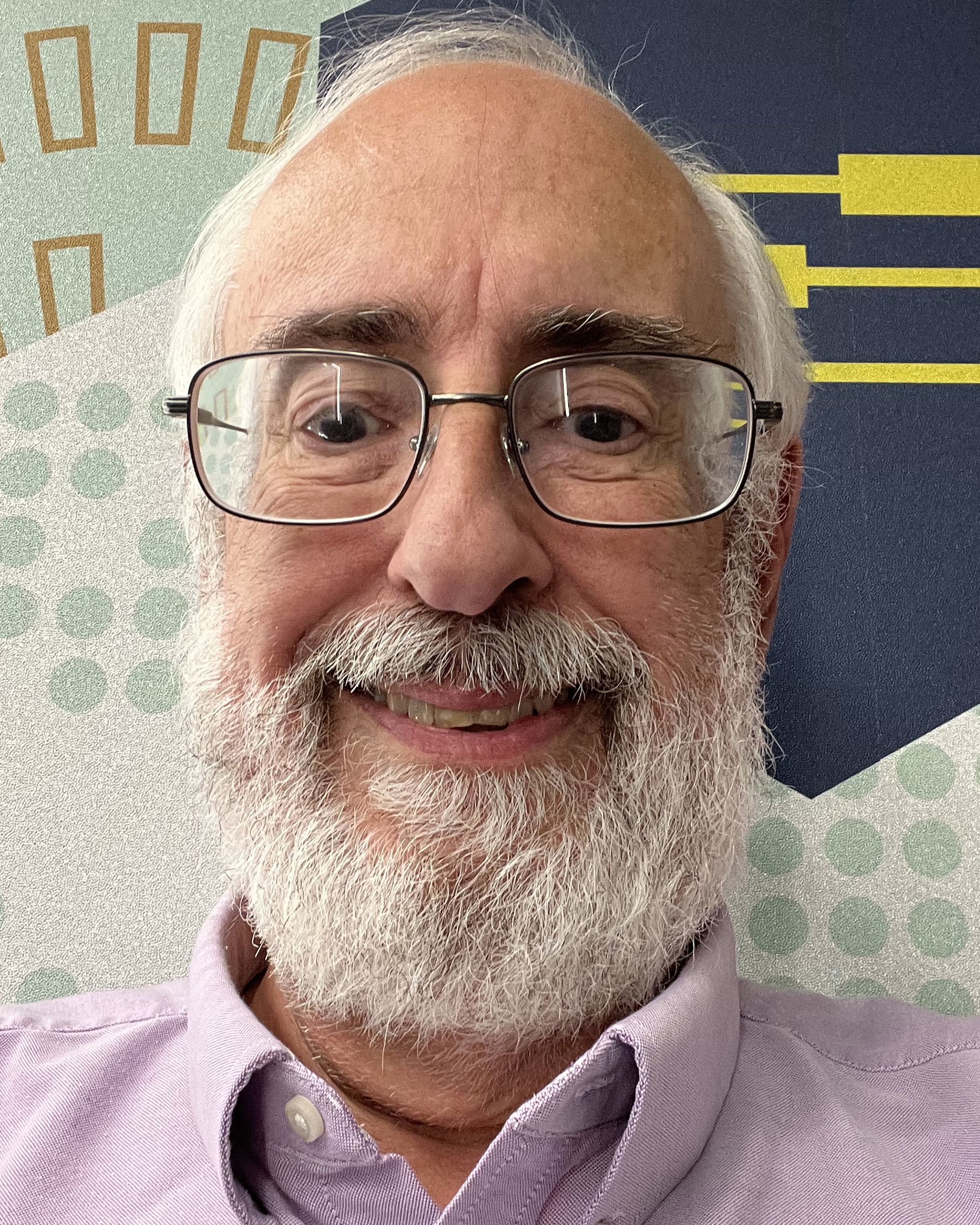
Sergio A. Hassan, Ph.D.
Education:
Ph.D. 1997, University of São Paulo, Campinas, Brazil
Languages Spoken: Spanish, Portuguese
Yong-Sok Lee, Ph.D.
Education:
Ph.D., 1988, Georgetown University, Washington, D.C.
Languages Spoken: Korean