

Virus Persistence and Dynamics Section
Established in 2017
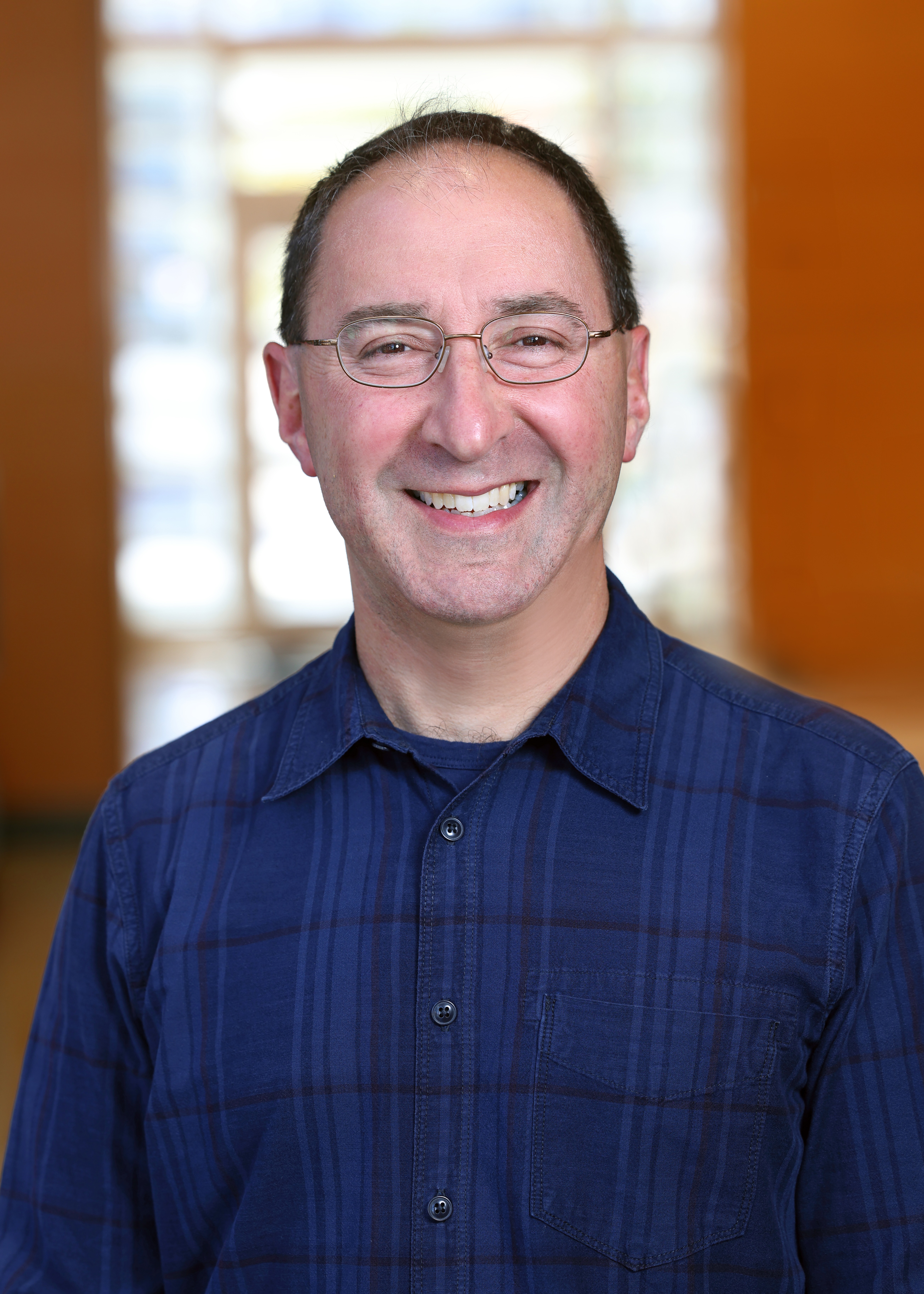
Eli Boritz, M.D., Ph.D.
Chief, Virus Persistence and Dynamics Section (VPDS)
Contact: boritze@niaid.nih.gov
Specialty(s): Infectious Disease, Internal Medicine Provides direct clinical care to patients at NIH Clinical Center
Major Areas of Research
- Mechanisms of HIV persistence in vivo
- Genetic and gene expression analyses of viruses and host cells
Program Description
VPDS was established with a mission to help develop means of targeting virus reservoirs and reducing disease progression in people living with HIV. One path toward this goal is to clarify the fundamental biology of HIV persistence during antiretroviral therapy (ART). Motivated by the genetic and functional diversity within key cellular reservoirs for the virus, VPDS develops and applies high-throughput methods for characterizing large numbers of single cells and viruses in great detail. Topics under investigation include the unique genetic programs expressed by infected cells; heterogeneity among individual infected cells as measured using “omics” tools; and the use of virus genetic analysis to detect critical events that may not be directly observable in vivo. We are investigating these issues both in individuals treated with standard-of-care ART and in study participants receiving experimental HIV cure-directed therapies.
Since the start of the COVID-19 pandemic, VPDS has also begun to apply core laboratory technologies to SARS-CoV-2 and other emerging viruses. These studies aim to define mutational properties and patterns of in vivo genetic variation that may help understand the potential of emerging viruses to acquire resistance against immune responses and medical countermeasures.
Biography
Education
M.D., Ph.D., University of Colorado Health Sciences Center, Denver, CO
Dr. Boritz began his HIV research career in the mid-1990s as a summer student in the laboratory of Dr. John K. Rose. An interest in fundamental and translational studies of host-virus interactions then led him to pursue combined M.D./Ph.D. training at University of Colorado Health Sciences Center in Denver. He completed his Ph.D. in the Immunology Program studying HIV-specific CD4 T-cell responses with Dr. Cara Wilson. After an internship and residency in Internal Medicine at Johns Hopkins Hospital, he came to NIAID as a fellow in infectious diseases. Following the clinical portion of his fellowship, he joined Dr. Daniel Douek's laboratory at Vaccine Research Center, where he worked to understand the cellular and molecular events that allow HIV reservoirs to persist in vivo. He joined the NIH faculty to establish the VPDS in 2017.
In addition to his activities in the research lab, Dr. Boritz serves as a core faculty member for the NIAID Infectious Diseases Fellowship Program, an attending physician on the NIAID Infectious Diseases Consult Service, and an HIV clinic preceptor for first-year Infectious Diseases fellows.
Clinical Studies
Selected Publications
Clark IC, Mudvari P, Thaploo S, Smith S, Abu-Laban M, Hamouda M, Theberge M, Shah S, Ko SH, Pérez L, Bunis DG, Lee JS, Kilam D, Zakaria S, Choi S, Darko S, Henry AR, Wheeler MA, Hoh R, Butrus S, Deeks SG, Quintana FJ, Douek DC, Abate AR, Boritz EA. HIV silencing and cell survival signatures in infected T cell reservoirs. Nature. 2023 Jan 4. Online ahead of print.
Stein SR, Ramelli SC, Grazioli A, Chung JY, Singh M, Yinda CK, Winkler CW, Sun J, Dickey JM, Ylaya K, Ko SH, Platt AP, Burbelo PD, Quezado M, Pittaluga S, Purcell M, Munster VJ, Belinky F, Ramos-Benitez MJ, Boritz EA, Lach IA, Herr DL, Rabin J, Saharia KK, Madathil RJ, Tabatabai A, Soherwardi S, McCurdy MT; NIH COVID-19 Autopsy Consortium; Peterson KE, Cohen JI, de Wit E, Vannella KM, Hewitt SM, Kleiner DE, Chertow DS. SARS-CoV-2 infection and persistence in the human body and brain at autopsy. Nature. 2022 Dec;612(7941):758-763.
Ko SH, Bayat Mokhtari E, Mudvari P, Stein S, Stringham CD, Wagner D, Ramelli S, Ramos-Benitez MJ, Strich JR, Davey Jr. RT, Zhou T, Misasi J, Kwong PD, Chertow DS, Sullivan NJ, and Boritz EA. High-throughput, single-copy sequencing reveals SARS-CoV-2 spike variants coincident with mounting humoral immunity during acute COVID-19. PLoS Pathog. 2021 Apr 8;17(4):e1009431.
Asokan M, Dias J, Liu C, Maximova A, Ernste K, Pegu A, McKee K, Shi W, Chen X, Almasri C, Promsote W, Ambrozak DR, Gama L, Hu J, Douek DC, Todd JP, Lifson JD, Fourati S, Sekaly RP, Crowley AR, Ackerman ME, Ko SH, Kilam D, Boritz EA, Liao LE, Best K, Perelson AS, Mascola JR, Koup RA. Fc-mediated effector function contributes to the in vivo antiviral effect of an HIV neutralizing antibody. Proc Natl Acad Sci U S A. 2020 Aug 4;117(31):18754-18763.
Pérez L, Anderson J, Chipman J, Thorkelson A, Chun TW, Moir S, Haase AT, Douek DC, Schacker TW, and Boritz EA. Conflicting evidence for HIV enrichment in CD32+ CD4 T cells. Nature. 2018 Sep;561(7723):E9-E16.
Boritz EA, Darko S, Swaszek L, Wolf G, Wells D, Wu X, Henry AR, Laboune F, Hu J, Ambrozak D, Hughes MS, Hoh R, Casazza JP, Vostal A, Bunis D, Nganou-Makamdop K, Lee JS, Migueles SA, Koup RA, Connors M, Moir S, Schacker T, Maldarelli F, Hughes SH, Deeks SG, and Douek DC. Multiple Origins of Virus Persistence during Natural Control of HIV Infection. Cell. 2016 Aug 11;166(4):1004-1015.
Research Network
HIV Cure Transformative Science Group (TSG), AIDS Clinical Trials Group (ACTG)
NIAID SARS-CoV-2 Assessment of Viral Evolution (SAVE) Program
Delaney AIDS Research Enterprise (DARE)
Virology Working Group, Epidemiology, Immunology, and Clinical Characteristics of Emerging Infectious Diseases with Pandemic Potential (EPICC), Infectious Diseases Clinical Research Program (IDCRP), Uniformed Services University
Training Programs
NIAID Infectious Diseases Fellowship Program
Research Group
The Virus Persistence and Dynamics Section (VPDS) works to understand the persistence of HIV and other viruses in vivo by developing and applying advanced sequencing and other technologies.